Selecting Medical Laboratory Equipment for Your Healthcare Facility
Every laboratory equipment procurement decision carries real consequences. The analyzer your facility chooses today will shape how accurately your team tests, how efficiently your workflows run, and how confidently you meet accreditation requirements for years to come. It is not a decision that can be made arbitrarily, and it is not one where guesswork serves anyone well.
Murex Diagnostics has worked with healthcare facilities of different sizes across the Philippines, and we have seen many clinics and diagnostic centers navigate procurement without a clear framework, often discovering the gaps only after the equipment is already installed. Knowing how to choose medical laboratory equipment is not about finding the lowest price or the most recognizable brand. It is about making a decision that holds up operationally, clinically, and financially over time. This guide walks through the key considerations to help your facility get it right.
Considerations for Buying Medical Laboratory Equipment
Equipping a laboratory well requires more than comparing product specifications. Before any purchase decision is made, there are several factors that deserve careful attention. Here is what to evaluate:
1. Define Your Test Menu First
Before selecting any equipment, map out the types and volumes of tests your laboratory performs. Every equipment decision, from analyzers to consumables, should flow from this foundation.
Choosing medical laboratory equipment before defining your test menu leads to mismatches in capacity, complexity, and clinical capability. A system with more throughput than you need wastes your budget. A system with less creates bottlenecks.
Start with a clear picture of what your laboratory needs to do, and let that picture guide every procurement decision that follows.
2. Calculate Total Cost of Ownership, Not Just Purchase Price
The sticker price is only one part of the equation. When evaluating equipment, look beyond the upfront cost and factor in the full range of ongoing expenses that accumulate over the equipment’s operational life:
- Routine maintenance and calibration
- Consumables and reagents
- Technical support and service calls
- The cost of unplanned downtime
The total cost of ownership calculation applies whether you are considering new or used lab equipment. A system that appears affordable upfront may carry higher consumable costs, require more frequent calibration, or demand expensive service calls. A well-planned approach to total cost of ownership gives a more accurate picture of what any equipment investment will actually cost your facility, and it often changes the comparison entirely.
3. Check Compatibility With Existing Systems
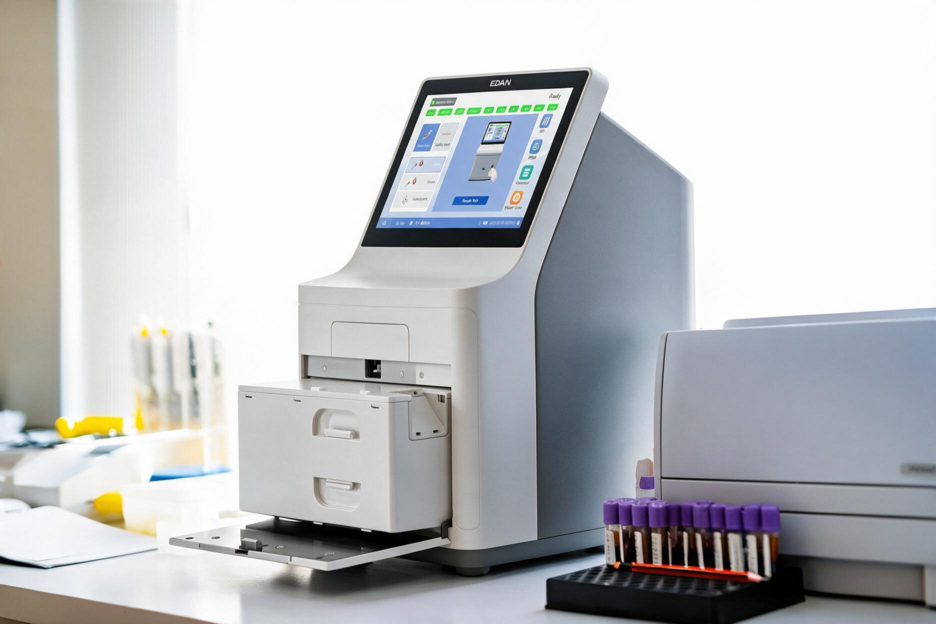
New equipment does not operate in isolation. It needs to integrate with your Laboratory Information System, your existing instruments, and your daily workflows.
When you select medical laboratory equipment, confirm compatibility first to avoid the risk of creating data gaps, slowing down reporting, or forcing manual workarounds that undermine the efficiency you were trying to gain.
Open system platforms offer more flexibility in reagent selection and test menu expansion, while closed systems may limit your options as your facility’s needs evolve. Clarify which type you are purchasing and what that means for your long-term operational flexibility before committing to a purchase.
4. Verify Regulatory and Accreditation Requirements
Before committing to a purchase, confirm that the manufacturer is a recognized, reputable producer whose products meet established international quality benchmarks. Equipment sourced from unverified manufacturers carries risks that go beyond performance, including questions about authenticity and safety.
Your supplier matters just as much as the product. Work with a laboratory equipment supplier in the Philippines who can provide complete validation documentation, including certificates of conformity, product registrations, and manufacturer credentials.
Having complete, verifiable equipment records in place before clinical use is a sound practice that protects your facility from operational and regulatory complications down the line.
5. Evaluate After-Sales Support Before You Buy
Equipment performance over its full lifespan depends as much on supplier support as on the equipment itself. A system that is expertly installed, properly calibrated, and consistently maintained performs better and lasts longer than one left to a facility’s own devices after delivery.
Look for medical equipment suppliers who include installation, application training, maintenance agreements, and responsive technical assistance as part of the purchase. After-sales support is not an add-on. It is part of the value you are paying for, and it is worth evaluating as carefully as the equipment itself.
Get Your Equipment Procurement Right the First Time

Smarter procurement decisions lead to fewer disruptions, lower long-term costs, and better patient care. Consider these factors when purchasing medical laboratory equipment to increase your facility’s chances of success and maximizing returns on investment.
Murex Diagnostics is a trusted laboratory equipment supplier in the Philippines, supporting clinics, hospitals, and diagnostic centers with a comprehensive range of new diagnostic equipment, installation services, application training, and responsive after-sales support.
If your facility is preparing for an equipment purchase, our team is ready to help you work through these considerations and find the right solution for your specific needs. Get in touch with us today!